

Introduction to Accufine 20mg
Accufine 20mg is a pharmaceutical formulation containing Isotretinoin, a potent retinoid derived from Vitamin A. It is primarily prescribed for the treatment of severe nodular acne that has not responded to other therapies, including antibiotics. Isotretinoin works by reducing sebaceous gland size and sebum production, thereby decreasing the growth of acne-causing bacteria and inflammation.
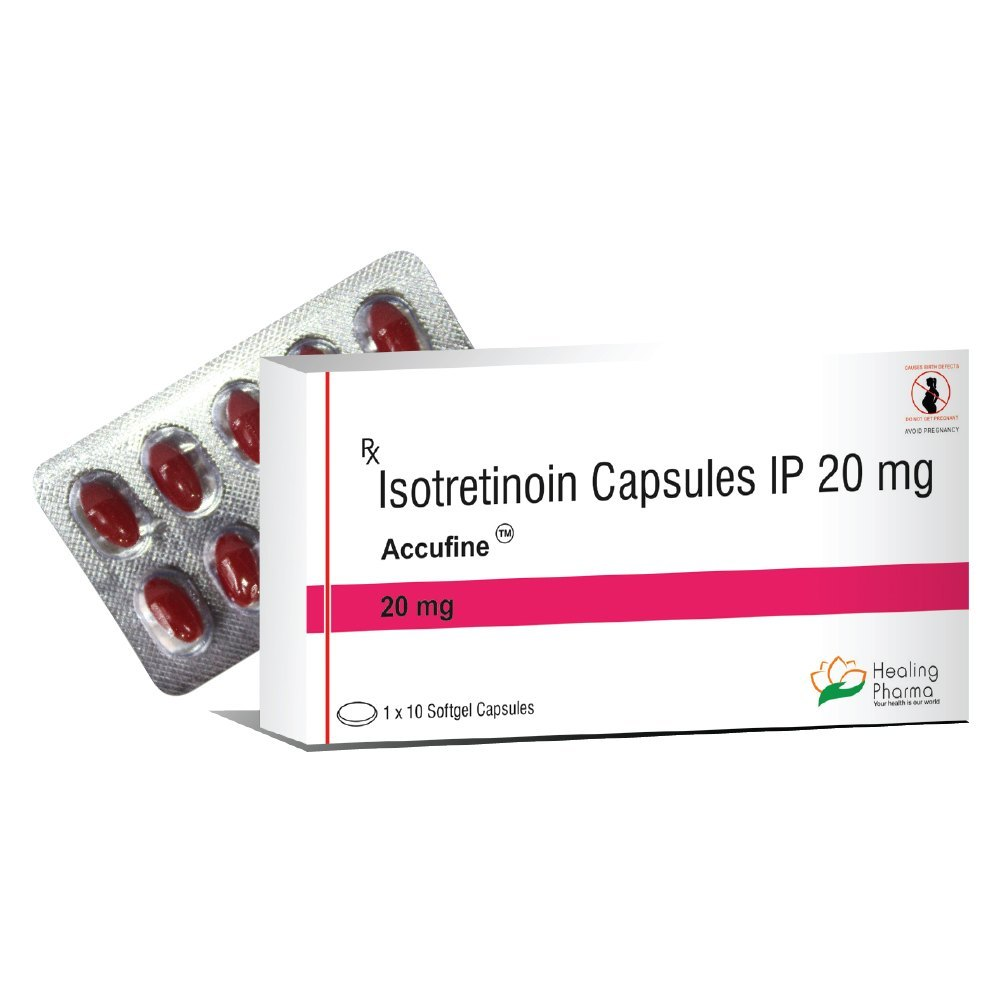
Indications and Uses of Accufine 20mg
Accufine 20mg, containing Isotretinoin, is a powerful medication primarily used in dermatology for the treatment of severe acne. Its uses extend beyond simple acne management due to its multi-faceted mechanism of action on the skin, sebaceous glands, and inflammation.
1. Severe Nodular or Cystic Acne
The primary indication for Accufine is severe nodular or cystic acne, which is characterized by:
- Large, inflamed nodules beneath the skin surface.
- Deep, painful cysts that can lead to scarring.
- Acne unresponsive to conventional therapies such as topical antibiotics, benzoyl peroxide, or oral antibiotics.
Accufine reduces the size and activity of sebaceous glands, lowers sebum production, and prevents clogged pores, making it highly effective in treating severe acne and preventing permanent scarring.
2. Acne Vulgaris Resistant to Other Treatments
Accufine is often prescribed for moderate acne that has not responded adequately to standard therapies, including:
- Topical retinoids (e.g., tretinoin, adapalene)
- Oral antibiotics (e.g., doxycycline, minocycline)
- Combination therapies (benzoyl peroxide with antibiotics)
In these cases, Accufine is considered a second-line or definitive therapy because of its higher efficacy in reducing acne lesions and long-term relapse prevention.
3. Prevention of Acne Scarring
One of the most important uses of Accufine is its ability to prevent permanent acne scars. Severe inflammatory acne can damage the dermis, leading to:
- Ice-pick scars
- Boxcar scars
- Hypertrophic or keloid scars
By reducing inflammation, controlling sebum production, and promoting proper skin turnover, Accufine minimizes the likelihood of scar formation.
4. Off-label Uses (Under Strict Supervision)
While Accufine is primarily prescribed for acne, it may occasionally be used off-label for other dermatological conditions such as:
- Severe rosacea
- Seborrheic dermatitis resistant to standard therapy
- Hyperkeratotic skin disorders (rare cases)
These off-label uses are strictly supervised by a dermatologist due to the potency of isotretinoin and its risk profile.
Mechanism of Action of Accufine 20mg
Accufine 20mg, containing Isotretinoin, is a systemic retinoid derived from Vitamin A. Its efficacy in treating severe acne is due to its multi-targeted action on the skin, sebaceous glands, and inflammatory pathways. Unlike topical treatments that only act locally, Accufine works at the cellular and molecular level, addressing the root causes of acne.
1. Reduction of Sebum Production
One of the primary mechanisms of Accufine is the reduction of sebum (skin oil) production:
- Isotretinoin acts on the sebaceous glands, causing them to shrink in size.
- Smaller sebaceous glands produce less sebum, which reduces the oily environment in which acne-causing bacteria (Cutibacterium acnes) thrive.
- This effect is both quantitative (less sebum) and qualitative (changes the composition of sebum, making it less prone to clogging pores).
This reduction in sebum is central to its long-term effectiveness and explains why Accufine often leads to sustained remission of acne even after treatment ends.
2. Normalization of Follicular Keratinization
Acne often develops due to abnormal keratinization, where dead skin cells accumulate inside hair follicles, forming comedones (blackheads and whiteheads).
- Isotretinoin normalizes the shedding process of keratinocytes in the follicles.
- This prevents follicular plugging, which is the first step in acne formation.
- By addressing this early stage of acne development, Accufine reduces the formation of new acne lesions.
3. Anti-inflammatory Effects
Inflammation plays a major role in acne progression. Accufine reduces inflammation by:
- Modulating immune responses within the skin.
- Reducing pro-inflammatory cytokines and mediators that cause redness and swelling.
- Limiting the inflammatory cascade triggered by Cutibacterium acnes.
This action helps decrease painful, inflamed nodules and cysts and improves the overall skin appearance.
4. Antibacterial Effects
Although Accufine is not an antibiotic, it indirectly reduces bacterial proliferation:
- By reducing sebum, it limits the growth environment for Cutibacterium acnes.
- This leads to a decrease in bacterial colonization, reducing the risk of infection and inflammation.
5. Effects on Skin Remodeling
- Isotretinoin influences the extracellular matrix in the dermis, helping to prevent scarring from severe acne.
- It promotes proper wound healing and reduces the risk of long-term skin damage.
6. Summary of Mechanisms
In simple terms, Accufine works on four main fronts:
- Decreases sebum production → less oily skin, fewer bacteria.
- Normalizes skin cell turnover → prevents clogged pores.
- Reduces inflammation → less redness, swelling, and pain.
- Indirectly reduces bacterial growth → lower risk of infection and pustules.
These combined effects make Accufine a powerful systemic treatment for severe acne, targeting the root causes rather than just the symptoms.
Dosage and Administration of Accufine 20mg
Accufine 20mg, containing Isotretinoin, is a potent oral retinoid used for the treatment of severe acne. Because of its strong effects and potential side effects, dosing must be carefully individualized based on the patient’s body weight, severity of acne, age, and tolerability. Strict adherence to dosage and administration guidelines is essential for both efficacy and safety.
1. Standard Adult Dosage
- Initial Dose: Typically 0.5 mg/kg/day.
- Target Dose: Up to 1 mg/kg/day depending on the severity of acne and patient tolerance.
- Example Calculation:
- A patient weighing 60 kg:
- Initial: 30 mg/day (1.5 capsules of 20 mg)
- Maximum: 60 mg/day (3 capsules of 20 mg)
- A patient weighing 60 kg:
- Duration of Treatment: Usually 15–20 weeks, but may vary depending on clinical response. Long-term treatment may be divided into courses if necessary.
- Administration:
- Take orally with meals to improve absorption.
- Swallow capsules whole; do not crush or chew.
- Preferably taken at the same time each day for consistent blood levels.
2. Pediatric Dosage
- Age Considerations: Accufine is generally not recommended for children under 12 years without specialist supervision.
- Weight-Based Dosing: Similar to adults, 0.5–1 mg/kg/day, adjusted carefully for body weight.
- Monitoring: Children require more frequent follow-up, particularly for side effects like dryness, mood changes, and laboratory abnormalities.
3. Special Populations
Elderly Patients:
- More susceptible to side effects (dry skin, joint pain, liver enzyme elevation).
- Often start at the lower end of the dosing range and titrate slowly.
Renal or Hepatic Impairment:
- Dose adjustments may be necessary.
- Liver function tests should be monitored regularly.
Pregnant or Breastfeeding Women:
- Contraindicated due to high teratogenic risk. Strict contraception is mandatory for women of childbearing age during and for at least one month after treatment.
4. Dosing Schedule and Administration Tips
| Patient Type | Daily Dose | Frequency | Duration | Administration Tips |
|---|---|---|---|---|
| Adult | 0.5–1 mg/kg/day | Once or divided twice daily | 15–20 weeks | Take with food, swallow whole |
| Children (>12 yrs) | 0.5–1 mg/kg/day | Once or divided | 15–20 weeks | Weight-adjusted, monitored closely |
| Elderly | 0.25–0.5 mg/kg/day | Once daily | 15–20 weeks | Start low, titrate slowly, monitor side effects |
| Renal/Hepatic Impairment | 0.25–0.5 mg/kg/day | Once daily | As prescribed | Regular liver function and renal monitoring |
5. Missed Dose Instructions
- If a dose is missed, take it as soon as remembered unless it is close to the next scheduled dose.
- Do not double the dose to make up for a missed one.
- Maintaining consistent daily dosing ensures optimal blood levels and therapeutic efficacy.
6. Importance of Compliance
- Adherence to prescribed dosage is crucial to maximize efficacy and reduce relapse.
- Premature discontinuation may result in recurrence of acne.
- Patients should also follow lifestyle and skin care recommendations provided by their dermatologist.
7. Summary
Proper dosage and administration of Accufine 20mg are essential for safe and effective treatment of severe acne. Key points include:
- Weight-based dosing (0.5–1 mg/kg/day)
- Administration with food
- Strict monitoring for side effects
- Avoiding use in pregnancy and adjusting for special populations
Side Effects
CAccufine 20mg, containing Isotretinoin, is a potent systemic retinoid that can produce a range of side effects due to its widespread action on skin, mucous membranes, liver, lipids, and other body systems. Understanding these effects is crucial for safe and effective use. Side effects can be common, less common, or serious, and often require monitoring or medical intervention.
1. Common Side Effects
These are mild to moderate effects that occur frequently and usually resolve with time or supportive care:
- Mucocutaneous Effects:
- Dryness of lips (cheilitis)
- Dry skin and flaking
- Dry eyes and irritation
- Nosebleeds (epistaxis) due to dryness of nasal mucosa
- Musculoskeletal Effects:
- Mild joint or muscle pain
- Temporary stiffness or soreness, especially after exercise
- Neurological Effects:
- Headache
- Mild dizziness
- Gastrointestinal Effects:
- Nausea or mild abdominal discomfort
- Occasional diarrhea
Management Tips:
- Use moisturizers and lip balms regularly
- Hydrate well and avoid harsh soaps
- Mild analgesics may relieve joint or muscle discomfort
2. Less Common Side Effects
These occur in a smaller percentage of patients but should be monitored:
- Skin Reactions:
- Rash or itching
- Photosensitivity leading to sunburn
- Temporary hair thinning (diffuse alopecia)
- Vision Changes:
- Blurred vision
- Difficulty seeing at night
- Increased sensitivity to light
- Neurological or Mood Effects:
- Irritability or mood swings
- Rare cases of mild depression
- Gastrointestinal Effects:
- Abdominal pain or cramping
- Changes in appetite
Management Tips:
- Use sunscreen and protective clothing outdoors
- Report persistent or severe vision changes to a doctor
- Monitor mood changes and seek help if symptoms worsen
3. Serious Side Effects
Though rare, these can be life-threatening and require immediate medical attention:
- Hepatic Effects:
- Elevated liver enzymes
- Jaundice (yellowing of eyes or skin)
- Lipid Abnormalities:
- Hypertriglyceridemia
- Elevated cholesterol
- Risk of pancreatitis in severe cases
- Psychiatric Effects:
- Severe depression
- Suicidal ideation
- Aggression or severe mood swings
- Gastrointestinal Complications:
- Severe abdominal pain (possible pancreatitis or inflammatory bowel issues)
- Musculoskeletal Complications:
- Bone pain or premature epiphyseal closure in children
- Tendon inflammation or rupture (rare)
- Allergic Reactions:
- Rash, itching, or swelling
- Difficulty breathing or anaphylaxis (very rare)
Monitoring and Prevention:
- Conduct regular liver function tests, lipid profiles, and complete blood counts during treatment.
- Monitor mood and mental health, especially in patients with a history of depression.
- Avoid high-fat diets or alcohol to reduce liver and lipid strain.
4. Laboratory Abnormalities
Patients taking Accufine may develop changes detectable in blood tests, including:
- Elevated liver enzymes (ALT, AST)
- Increased triglycerides and cholesterol
- Mild anemia or changes in white blood cell counts
Recommendation: Regular blood work is essential to detect these early and prevent complications.
5. Duration and Reversibility
- Most common side effects (dryness, mild joint pain) are reversible after discontinuing the medication.
- Serious effects like liver or psychiatric complications may persist if not addressed promptly.
- Regular follow-up ensures side effects are managed early, minimizing risk.
6. Summary
Accufine 20mg is highly effective but comes with a range of side effects. Understanding the spectrum—from common dryness and irritation to rare but serious complications—is crucial for:
- Patient safety
- Optimal treatment outcomes
- Timely intervention when complications arise
Key Takeaway: Patients must be monitored regularly, adhere to follow-up schedules, and report any unusual or severe symptoms immediately.blood tests is essential during treatment.
Precautions and Contraindications
Contraindications:
- Pregnancy: Isotretinoin is teratogenic and must not be used during pregnancy or by women planning to conceive.
- Lactation: Should not be used during breastfeeding.
- Hypersensitivity: Contraindicated in patients with known hypersensitivity to isotretinoin or any component of the formulation.
Precautions:
- Liver Function: Monitor liver enzymes regularly.
- Lipid Profile: Check cholesterol and triglyceride levels.
- Bone Health: Assess for signs of bone pain or stiffness.
- Psychiatric Health: Monitor for mood changes or signs of depression.
7. Warnings
- Sun Sensitivity: Increased risk of sunburn; advise patients to use sunscreen and protective clothing.
- Cosmetic Procedures: Avoid waxing, laser treatments, or dermabrasion during and for at least 6 months after treatment.
- Blood Donation: Do not donate blood during treatment and for at least 1 month after discontinuation.
- Driving: May impair night vision; caution when driving at night.
Drug Interactions of Accufine 20mg
Accufine 20mg, containing Isotretinoin, is a potent systemic retinoid. Because of its effects on the liver, lipids, and central nervous system, it can interact with several other medications, supplements, and substances. Understanding these interactions is critical to avoid serious side effects and ensure safe treatment.
1. Interaction with Antibiotics
- Tetracyclines (e.g., Doxycycline, Minocycline):
- Concurrent use with isotretinoin can increase the risk of benign intracranial hypertension (pseudotumor cerebri).
- Symptoms include headache, nausea, vomiting, and visual disturbances.
- Recommendation: Avoid combination therapy. If necessary, monitor closely with a healthcare professional.
- Other Antibiotics:
- While other antibiotics (like penicillins) are generally safe, always consult a doctor to avoid unforeseen interactions.
2. Interaction with Vitamin A and Retinoids
- High-Dose Vitamin A Supplements:
- Isotretinoin is a derivative of vitamin A; taking additional high-dose supplements may lead to hypervitaminosis A, causing liver toxicity, headache, nausea, and bone pain.
- Recommendation: Avoid vitamin A supplementation during treatment.
- Other Retinoids (Topical or Oral):
- Combining with other retinoids can increase the risk of skin irritation, dryness, and toxicity.
3. Interaction with Blood Lipid-Modifying Drugs
- Fibrates or Statins:
- Since isotretinoin can increase cholesterol and triglyceride levels, concurrent use with lipid-lowering medications may require careful monitoring.
- Blood tests should be conducted regularly to adjust doses as needed.
4. Interaction with Corticosteroids
- Systemic Corticosteroids (e.g., Prednisone):
- Both corticosteroids and isotretinoin can increase the risk of bone demineralization, especially with long-term use.
- Recommendation: Avoid long-term concurrent use unless prescribed and monitored by a doctor.
5. Interaction with Antidepressants or Mood-Altering Drugs
- SSRIs, SNRIs, or Other Psychiatric Medications:
- Isotretinoin has been associated with mood changes, depression, or suicidal ideation.
- Concurrent use with psychiatric medications requires close monitoring for behavioral changes.
6. Alcohol Interaction
- Alcohol:
- Increases the risk of liver toxicity and triglyceride elevation, both of which are side effects of isotretinoin.
- Excessive alcohol consumption should be strictly avoided during treatment.
7. Interaction with Hormonal Contraceptives
- Oral Contraceptives:
- No direct negative interaction with isotretinoin, but strict adherence is essential because isotretinoin is highly teratogenic.
- Two forms of birth control are recommended for female patients of childbearing potential.
Monitoring and Recommendations
- Regular Blood Tests:
- Liver function, lipid profile, and triglycerides should be monitored when taking interacting drugs.
- Avoid Self-Medication:
- Patients should inform their doctor about all medications and supplements before starting Accufine.
- Report Symptoms:
- Headache, visual changes, or severe gastrointestinal symptoms may indicate dangerous interactions.
Monitoring and Follow-up
Regular follow-up visits are crucial to assess treatment efficacy and monitor for adverse effects:
- Baseline Assessments: Liver function tests, lipid profile, pregnancy test (for females of childbearing potential).
- During Treatment: Monthly monitoring of liver enzymes and lipid levels.
- Post-Treatment: Assess for any persistent side effects and evaluate the need for further treatment.
Patient Education
Educate patients on:
- Proper Use: Take capsules with food; do not chew or crush.
- Hydration: Maintain adequate fluid intake to prevent dehydration.
- Skin Care: Use moisturizers and lip balms to alleviate dryness.
- Sun Protection: Apply sunscreen and avoid prolonged sun exposure.
Special Populations
- Pediatrics: Use with caution in children; dosing should be based on body weight.
- Geriatrics: Elderly patients may be more sensitive to side effects; initiate at lower doses.
- Renal Impairment: Dose adjustments may be necessary; monitor renal function closely.
Overdose Management
In case of overdose:
- Immediate Action: Seek emergency medical attention.
- Symptoms: May include nausea, vomiting, headache, and dizziness.
- Treatment: Supportive care; no specific antidote available.
Conclusion
Accufine 20mg (Isotretinoin) is an effective treatment for severe acne, offering long-term remission for many patients. However, due to its potential for serious side effects, it should be prescribed and monitored by healthcare professionals experienced in its use. Patient education and regular follow-up are essential components of successful therapy.